
About Sadus
The Story of Sadus
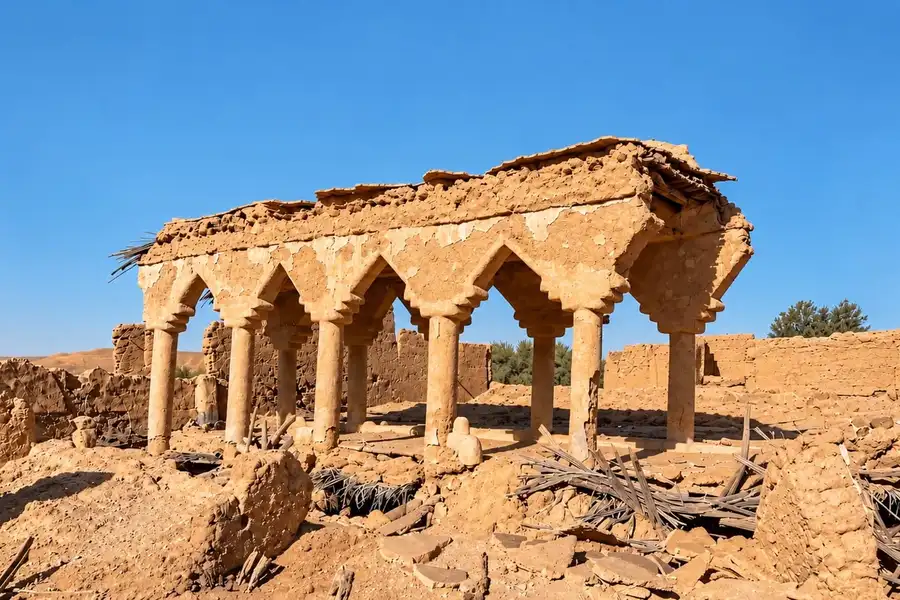
Sadus is a historic village in Diriyah Governorate, about 70 km north-west of Riyadh, named after Banu Sadus, who settled here before Islam. It is one of the oldest known human settlements in the Arabian Peninsula.
An open-air museum under the Saudi sky
Sadus is one of the oldest known human settlements in the Arabian Peninsula, and one of the Kingdom's villages of long-standing cultural value.
The name
Early Arabic sources call Sadus "Al-Qurayyah" (the little village), "Al-Qaryah" (the village) and "the village of Banu Sadus". Some geographers, such as Al-Bakri, used the diminutive Al-Qurayyah; others, such as Yaqut, called it Al-Qaryah and noted that "Banu Sadus bin Shayban bin Dhuhl bin Tha'labah live there". Banu Sadus, cousins of Banu Hanifah, settled here before Islam.
Around the eighth century AH the name was shortened to simply "Sadus", the place taking the name of the people who lived in it, and it has been known by that name ever since. The change of name may also reflect the town's growth: first called the little village, it became "the village" once it had expanded.
Banu Sadus trace their lineage to Sadus bin Shayban bin Dhuhl bin Tha'labah bin Ukabah bin Sa'b bin Ali bin Bakr bin Wa'il. This lineage links them to Banu Hanifah, who settled Wadi Hanifah, and indicates that they settled in Al-Yamamah at the same time, some two centuries before Islam.
A village between history and nature
More than a group of old buildings
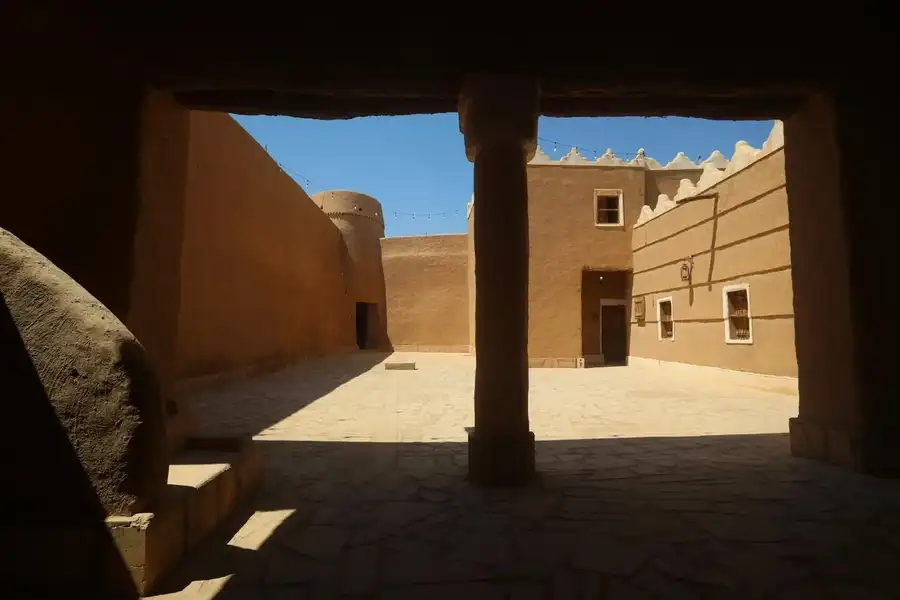
Sadus lies in Diriyah Governorate, Riyadh Region, in a landscape that brings together the historic village, farming oases and the surrounding valleys and ravines. But it is more than a group of old buildings: it is a whole fabric of memory, building, farming, hospitality and folk arts that together shaped the identity of its people and its place.
Najdi architecture
Architecture shaped by its environment
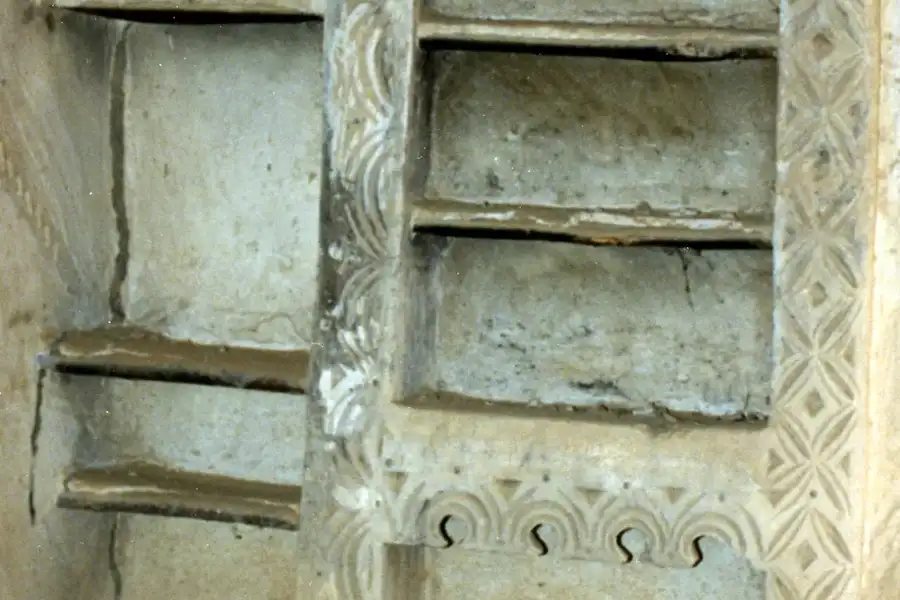
Sadus is known for Najdi architecture adapted to its environment: mud-brick walls, inner courtyards, narrow passages, local doors and windows. Inside the houses, carved plaster niches and shelves keep the skill of builders who knew the place well.
Through travellers' eyes
The English traveller Lewis Pelly passed through on 3 March 1865 and described its small fort, surrounded on several sides by palms.
Sadus appears in local historical, geographical and literary sources and in the books of European and Arab travellers, and it has drawn Arab and foreign researchers.
A village between history and nature
Sadus lies in Diriyah Governorate, Riyadh Region, 70 km north-west of the city of Riyadh, in a landscape that brings together the historic village, farming oases and the surrounding valleys and ravines. It is distinguished by Najdi architecture adapted to its environment, and by a whole fabric of memory, building, farming, hospitality and folk arts.
The local community of Sadus has played an important part in preserving the town's built heritage, its crafts and its oral traditions. Today the village is being presented anew as a sustainable cultural and tourism destination that keeps its authenticity while creating new experiences that bring together history, place, community and Saudi culture.
Sources: Muhammad Abd al-Sattar Othman, The Traditional Architecture of Sadus: an archaeological and architectural study; Abdullah bin Khamis, Mu'jam al-Yamamah; Hamad Al-Jasser, Geographical Dictionary of Saudi Arabia.
Get to know Sadus for yourself
Read its history across the centuries, or send a visit request and the village team will be in touch.