
About Sadus
A History Across the Centuries
The history of Sadus runs from early settlement in the Al-Yamamah region, through Banu Sadus, early Islam and the trade and pilgrimage routes, to its growth under the Saudi state.
Five chapters in the history of Sadus
Early settlement
Part of the ancient history of the Al-Yamamah region.
Banu Sadus
They settled in the area, and the town came to bear their name.
Early Islam
The town was part of the early Islamic world, and men of Banu Sadus took part in the transmission of hadith and in the early conquests.
Trade and pilgrimage routes
Sadus was a stop on the historic routes that crossed central Arabia.
Farming and building
A farming and building tradition grew here, reflecting the local community's ability to build and adapt to its environment.
The history of Sadus can be divided into three periods.
Before Islam
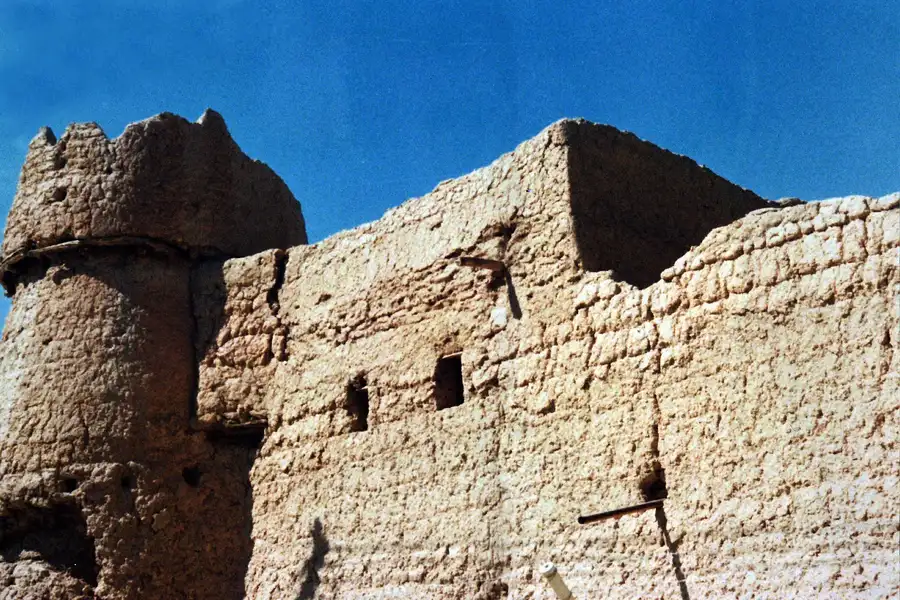
Successive civilisations lived on the land of Sadus. The palace attributed to Solomon, son of David, is taken as evidence of how ancient and important that civilisation was, and its column, known as Al-Manara, amazed travellers; some described it as an architecturally harmonious column.
The tribes of Tasm and Jadis are known to have lived in Al-Yamamah several centuries before Islam and to have had a civilisation of some standing in the region, which includes Sadus among other towns; they are therefore believed to have lived in Sadus too. Banu Hanifah later settled the area, two centuries before Islam, and Banu Sadus are believed to have settled the town (Al-Qurayyah) in the same period and built it up until it took their name: the village of Banu Sadus.
Early Islam
Islam reached the villages of Al-Yamamah before the death of the Prophet ﷺ in the tenth year after the Hijrah. Banu Sadus agreed to send a delegation to the Prophet ﷺ to declare their conversion. The delegation brought him a gift of Jadhami dates, a variety from Al-Yamamah, and the Prophet ﷺ prayed for a blessing on the dates and on the garden they came from.
Several Companions of the Prophet came from Banu Sadus and were among the narrators of hadith, and Banu Sadus took part in the early Islamic conquests in the Levant, Iraq, Persia and elsewhere.
From 850 AH
The Al Muammar and a return to life
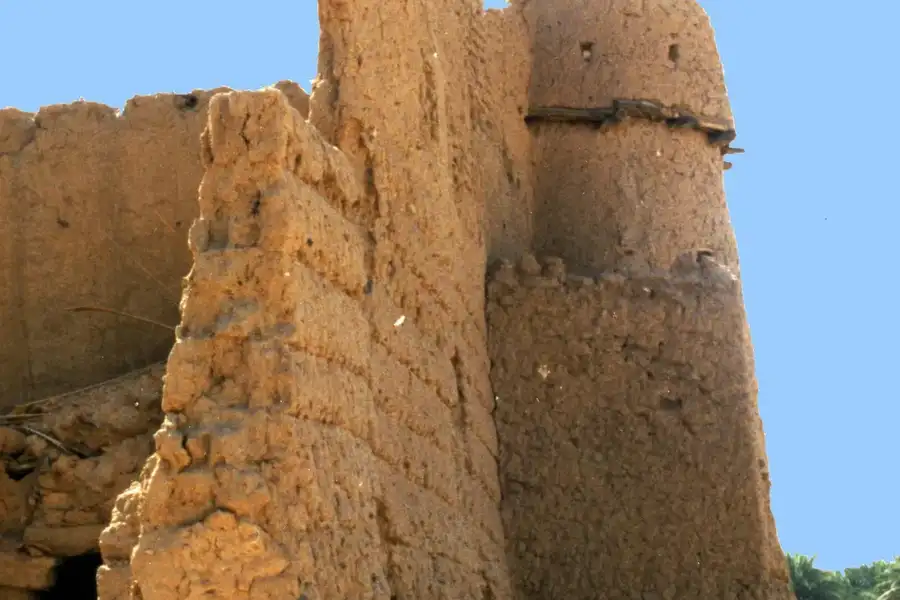
The modern history of Sadus is closely tied to the Al Muammar family. Their story in the region begins in 850 AH / 1446 CE, when Hasan bin Tawq, the family's forefather, bought Al-Uyaynah from the Al Yazid of Banu Hanifah, settled there and built it up. Within the limits of his lands, as recorded by Ibn Bishr, Sadus counted among the towns of Al-Uyaynah. Oral tradition holds that Sadus was then a ruin of old buildings and disused wells. Hasan bin Tawq was taken with the place, re-dug its largest well, known as Al-Fargh, and settled people there to farm it; others soon followed. He built the fortified settlement of Sadus for its inhabitants, called the Palace of Sadus and later known as Al-Balad, and Sadus remained a farming oasis dependent on Al-Uyaynah.
Sadus then lived through events that shaped its buildings directly. In 1058 AH / 1648 CE the Al Muhammad family settled there after being driven out of Al-Uyaynah, bringing a new wave of building. In 1081 AH / 1670 CE it was attacked by Barrak bin Ghurayr Al-Khalidi, ruler of Al-Ahsa and Al-Qatif. In 1098 AH / 1687 CE the people of Huraymila, joined by Muhammad bin Muqrin, ruler of Diriyah, and Zamil bin Uthman, ruler of Al-Kharj, marched on the town and destroyed its palace; from then on its people took great care to fortify it.
After the Al Muammar palace in Al-Uyaynah was demolished in 1173 AH / 1760 CE, and Al-Uyaynah lay in ruins for about a century, Sadus was very probably one of the main places its people moved to, and the town grew in size and population.
In 1234 AH Mishari bin Muammar came to Sadus and stayed there, and Mishari bin Saud was held captive in the town. In 1259 AH Sadus was one of the places where Faisal bin Turki based his forces on his way to Riyadh.
In 1309 AH the people of Sadus fought alongside Imam Abdulrahman, father of King Abdulaziz, against Ibn Rashid at Huraymila. In 1319 AH, when King Abdulaziz entered Riyadh, the Al Muammar of Sadus, led by their emir Saad bin Muhammad Al Muammar, supported him with seventy camels, came to pledge their allegiance and took part, with others from across the country, in the founding, unification and building of the Kingdom.
Security and growth
Beyond the walls
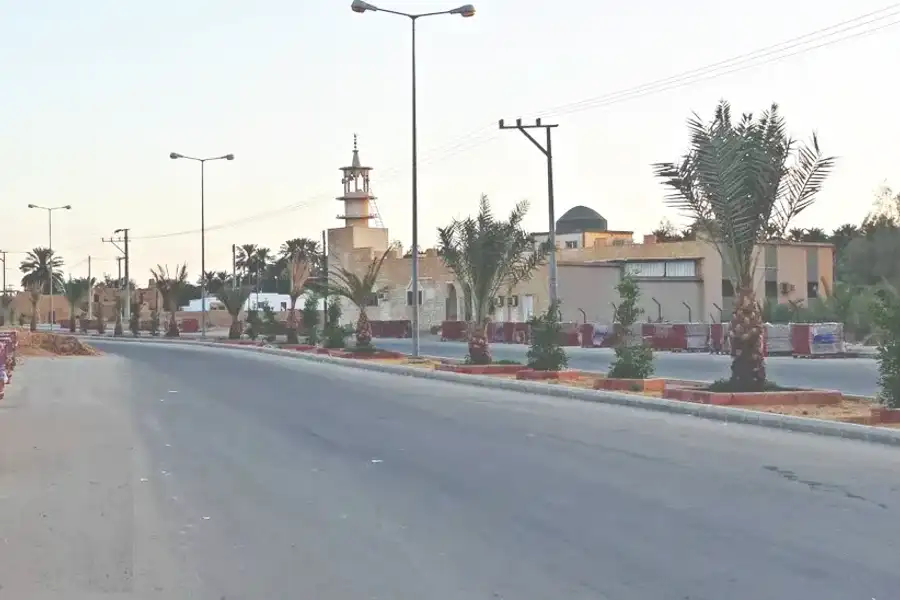
Security brought immediate growth. Building spread beyond the walls of the old town: to Jeddah quarter in the south-east, named in celebration of King Abdulaziz's entry into Jeddah, and to Al-Ras in the north, while a large Al Muammar palace was added on the south-eastern side of the old town. Sadus has also shared in the Kingdom's modern development: a new settlement was built next to the old town on its north-western side and provided with government services and schools.
Sources: Muhammad Abd al-Sattar Othman, The Traditional Architecture of Sadus; Uthman bin Bishr, Unwan al-Majd; Muhammad bin Umar Al-Fakhiri, Al-Akhbar al-Najdiyyah; Husayn bin Ghannam, Tarikh Najd; Hamad Al-Jasser, Jamharat Ansab al-Usar al-Mutahaddirah fi Najd.
Walk through this history
The historic trails take you between the walls, the lanes and the old mosque.