Letters from a distant age
In the mountain range north of Sadus, the researcher Abdulmohsen bin Muhammad bin Muammar found ancient inscriptions in the South Arabian Musnad script, estimated to be between two and three thousand years old.
They are among the clues that point to how long people have lived here.
Two stones in a university museum
An archaeological team from King Saud University found ancient writing on two stones in Sadus and took them to the university museum in Riyadh.
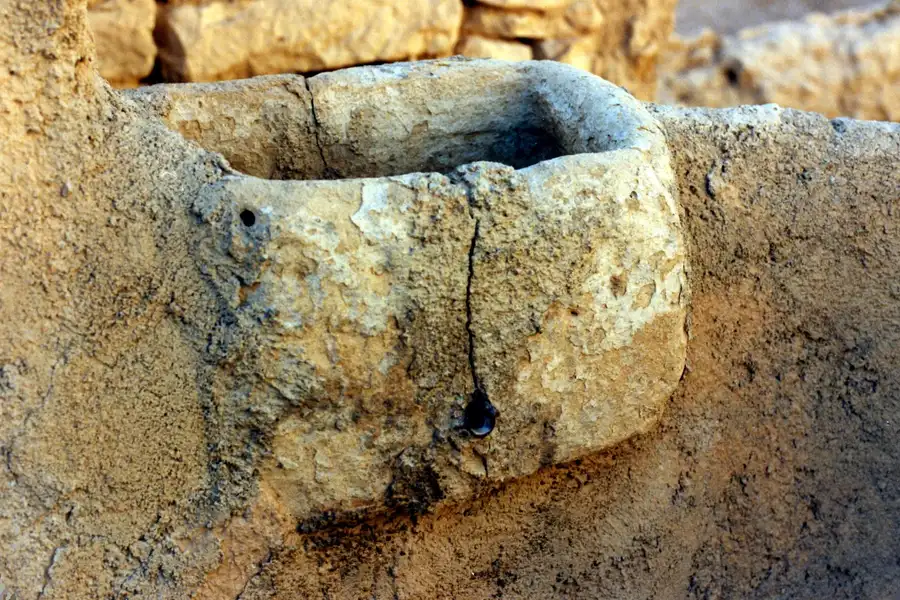
The same museum received the rock-cut basin that once stood in the house of Mishari bin Faisal bin Muammar.
A boulder in a ravine
The archaeologist Muhammad Al-Hamoud describes a large sedimentary boulder lying in the bed of a ravine near Sadus, about 2.60 by 1.77 metres, carved with Thamudic inscriptions that include personal names.
Weather has worn some of them away, so the letters seem to come and go on the stone.
The Map Stone
On the summit of the mountain south-east of Sadus, Dr Muhammad bin Abdulrahman Al-Rashid came upon a rock with carvings of unknown age. He named it the Map Stone, because he read its lines as a map of the town's wells. Fossils of sea creatures were found there too.
Al-Rashid himself notes that the stone has never been dated or studied in any published work.
How to look at the stones
The carvings are fragile, and sun and wind have already erased some of them. Look at them in low light, early in the morning or late in the day, when shadows bring out the edges of the letters.
Do not touch them or draw over them, and visit with someone who knows where they are.