The oldest account
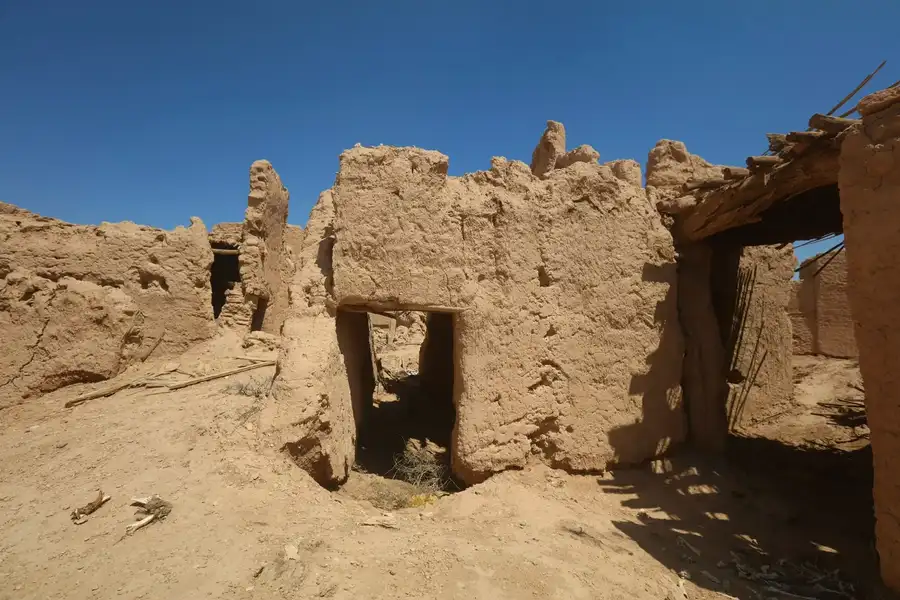
Al-Hamdani, a Yemeni scholar of the fourth century AH, wrote of the village of Banu Sadus and of a palace there "built of wondrous hewn rock, in ruins, with only its keep still standing". Sheikh Hamad Al-Jasser called this one of the oldest texts he had found on those remains.
Early writers tended to attribute any marvellous, finely made building to Solomon, son of David, and so the palace came to bear his name.
Sketched in 1865
Pelly did more than describe it: one of his companions, Dews, drew the column in 1281 AH, 1865 AD.
Pelly also noticed that the villagers were taking stone and earth from the neighbouring ruins and from the base of the column itself. Its footing was so undermined, he wrote, that moving a few stones would bring it down.
Why the column vanished
According to the sources, the minaret-like structure, with writing carved into its stone, survived until fairly recently. When the villagers saw foreign travellers coming to look at it, they pulled it down.
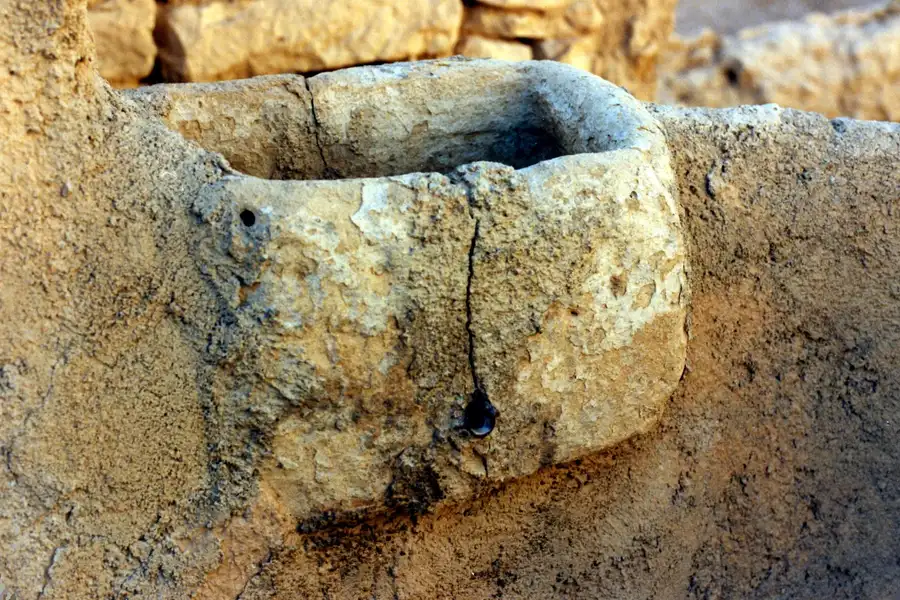
Sheikh Abdullah Al-Anqari heard from people who remembered it that it was made of large round stones set one on top of another. They were later broken up to build houses, and one of them was even used to store dates.
From column to quarter
When a new quarter was built on the spot where the column had stood, near the remains of the ancient palace, it took the column's name: Al-Manara.
The third phase of the town's development project covers the Al-Manara quarter and the old palace, so this corner of Sadus may one day tell its whole story again.
The monument today
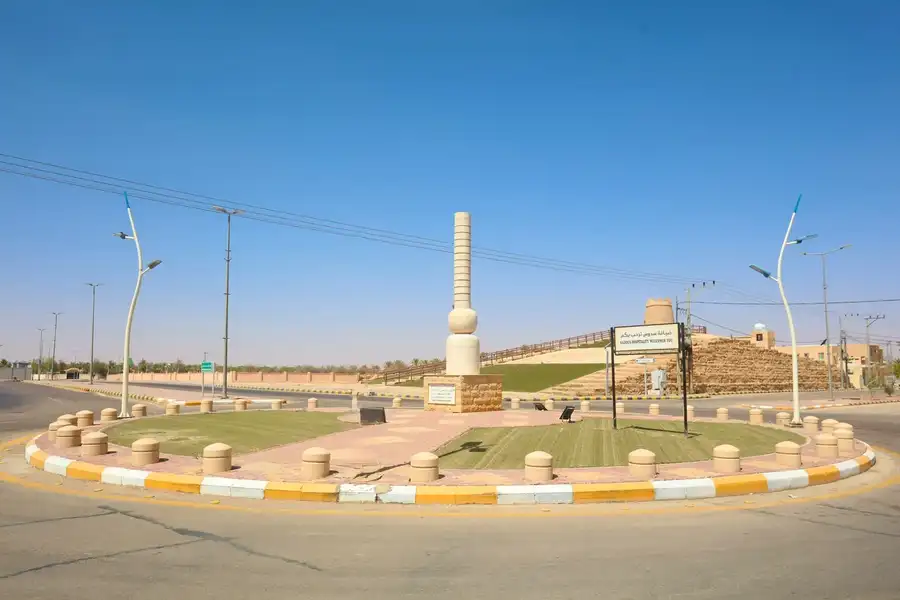
On the Sadus roundabout today stands a modern memorial in the shape of a stone column, with a restored watchtower behind it.
It is not the ancient obelisk, but it brings it to mind for everyone who enters the town, and invites the question: what stood here before?