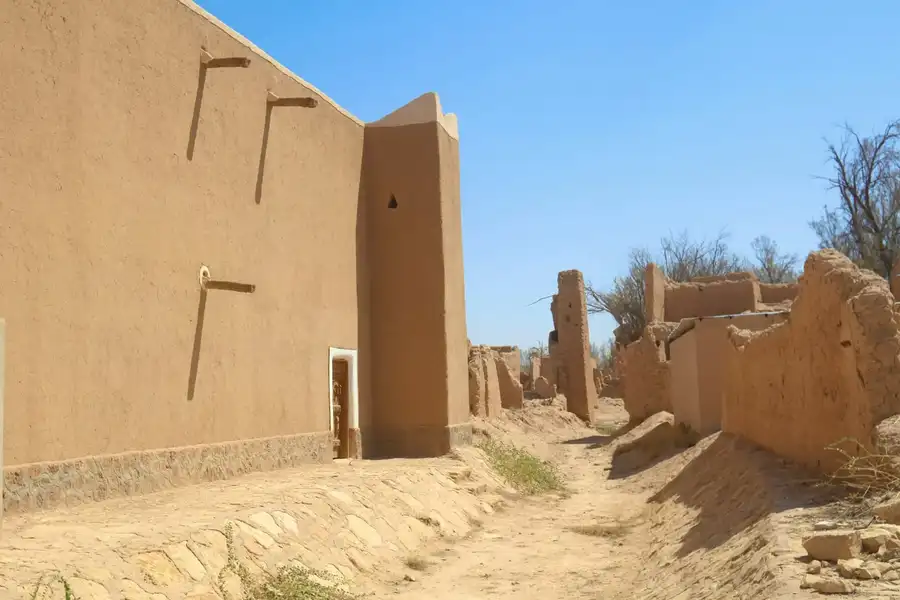
Two floors, against the custom
The mosque of Sadus stands out because it has two storeys, unlike the mosques built in Najd at the same time. It is one of the features that drew scholars to the architecture of Sadus: Dr Muhammad Abdulsattar Othman devoted a whole archaeological and architectural study to it, titled "The Mosque of Sadus".
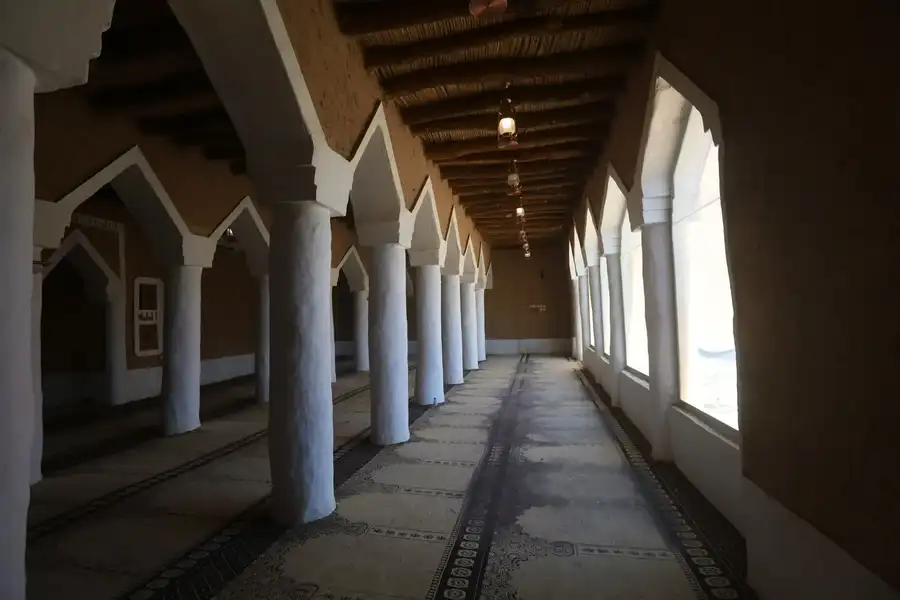
Inside are white columns, Najdi arches and a timber ceiling, with daylight slipping quietly between them.
At the heart of the village
The mosque was never only a place of prayer. It is a religious and social landmark, bound up with the daily life of the villagers.
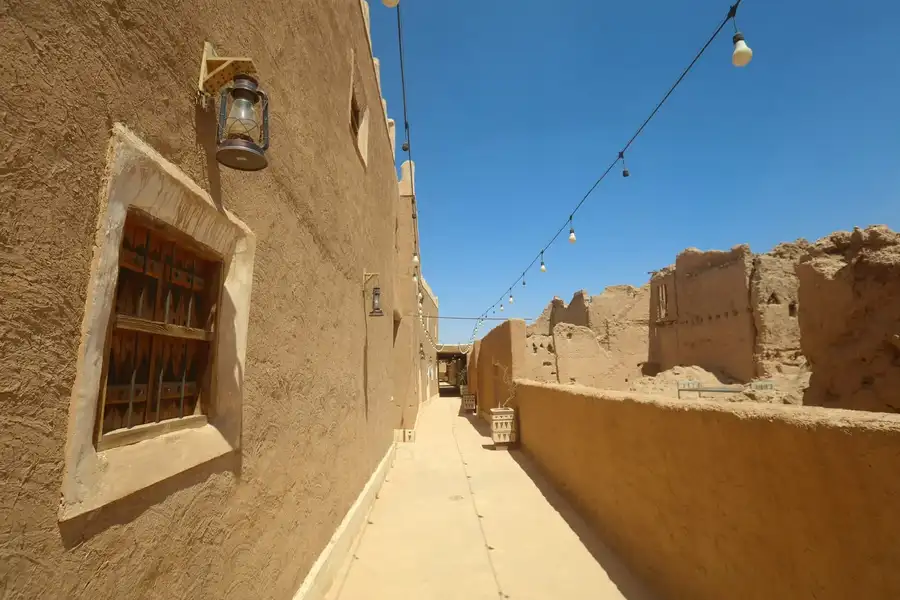
Picture the narrow lanes around it at prayer time: footsteps on packed earth, wooden doors swinging open, neighbours meeting, then scattering again to their houses and their farms.
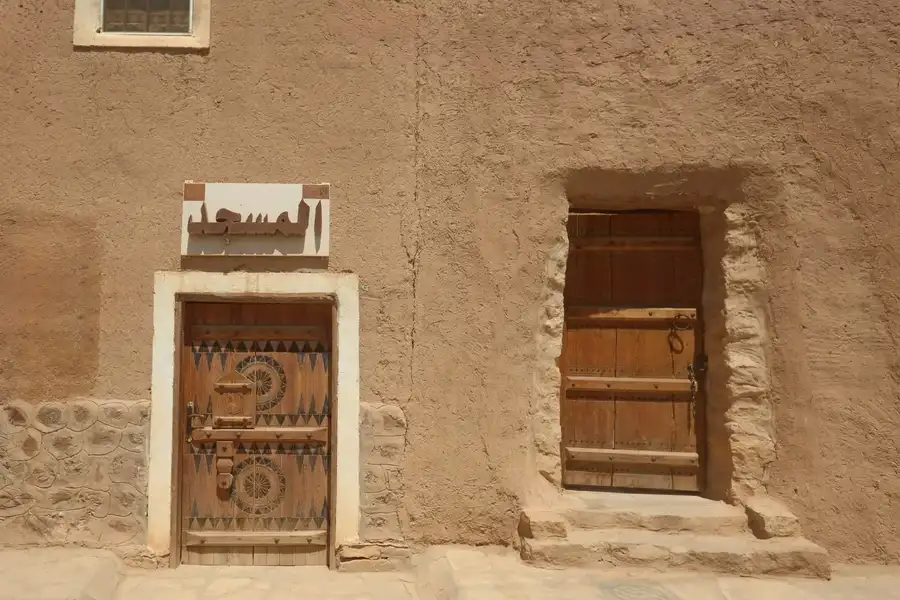
The mosque door
On a restored mud facade, a sign reading "the mosque" sits above a wooden door carved with geometric patterns. Beside it is a plainer plank door in a stone frame.
Linger at the two doors for a moment. The carving, the studs and the stone threshold are small details that sum up the taste of the Najdi carpenter.
Visiting with respect
The old mosque is a place of prayer before it is a sight to see. Enter quietly and respectfully, take off your shoes at the door and leave the place its silence.
Then carry on to the houses and lanes around it: they belong to the same story.