The well called Al-Fargh
Oral tradition says that Sadus was a place of old ruins and dry wells when Hasan bin Tawq, forefather of the Al Muammar family, took a liking to it after buying Al-Uyaynah in 850 AH. He dug out its largest well, called Al-Fargh, again, settled people to farm the land, and before long others began arriving to live there.
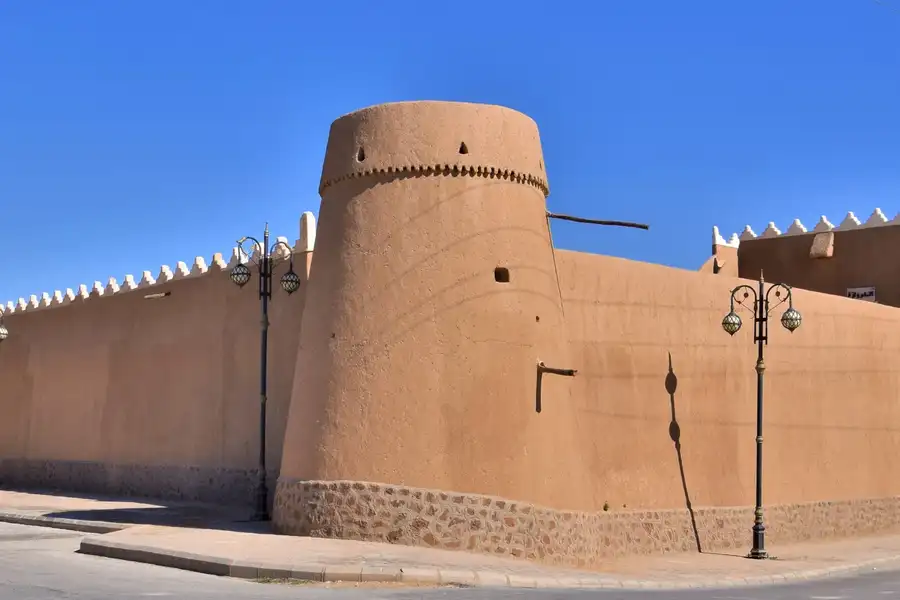
From that beginning grew the fortified settlement called the Palace of Sadus, known today as Al-Balad.
Pelly's little fort
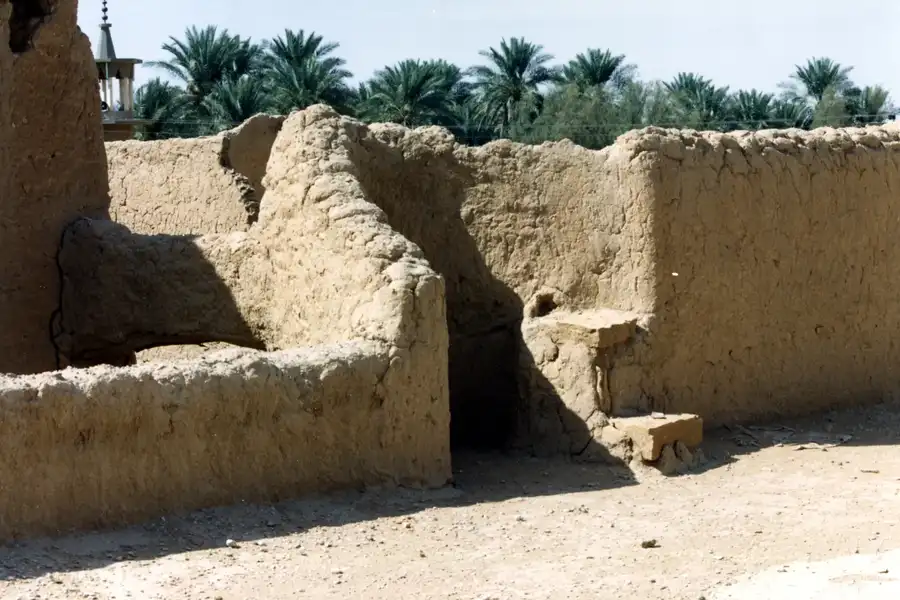
When the traveller Lewis Pelly stopped at Sadus on the evening of 3 March 1865, he saw a cluster of small, pretty farms gathered in the valley around a little fort, and noted how neat and connected the houses and garden walls were. That fort is Al-Balad.
The mud walls still stand, with the palms rising behind them.
The year the palace fell
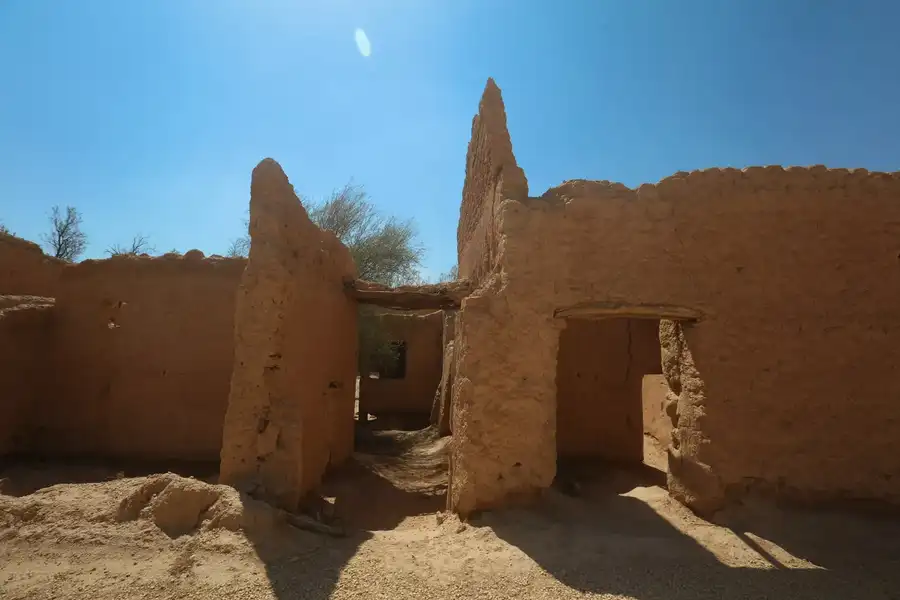
In 1098 AH the people of Huraymila, joined by Muhammad bin Muqrin, chief of Diriyah, and Zamil bin Othman, chief of Al-Kharj, marched on Sadus and tore down its palace in revenge for an earlier attack by Abdullah bin Muammar. They chose Sadus because it was close to them and stood as a symbol of the emirate of Al-Uyaynah.
The quarter was rebuilt afterwards, and it remained the heart of the town.
Growing northwards
In the thirteenth century AH, the decline of Al-Uyaynah and the fall of Diriyah sent new residents to Sadus, and the fortified quarter was extended to the north, between the tower of Al Abdulaziz, also called Al Jumai'a, and the tower of Al Muhammad.
When Lorimer counted the houses of Sadus for his Gazetteer of the Persian Gulf, he recorded 160.
Where the project begins
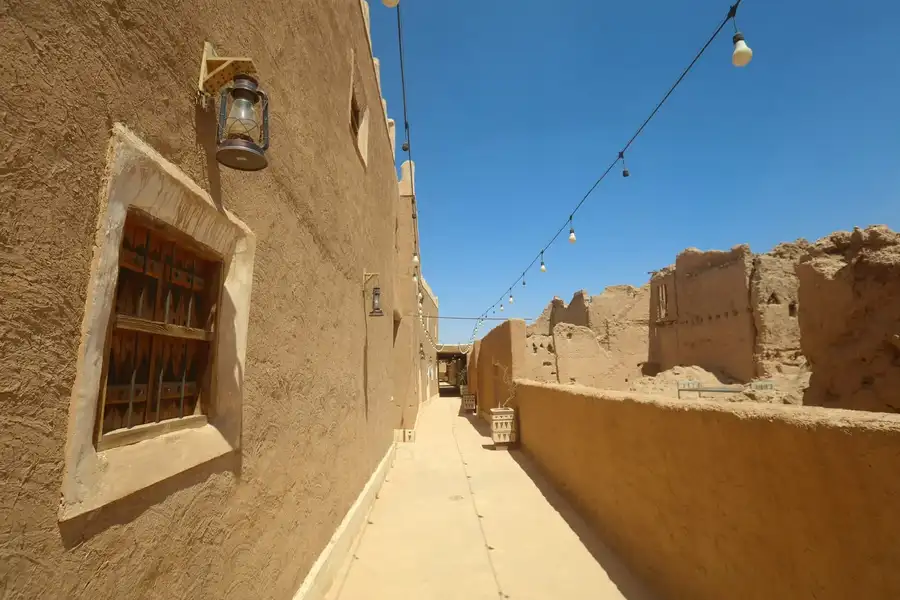
Al-Balad is the focus of the first phase of the Sadus development. The plan points to a village inn, the old school, a visitor centre and museum and a traditional market, along with better lighting, paths and squares.
In other words, the oldest quarter of the town will be the first to welcome its visitors.