A complete walled village
Researchers describe Sadus as perhaps the smallest complete walled village, not only in the Kingdom but possibly in the whole Arabian Peninsula.
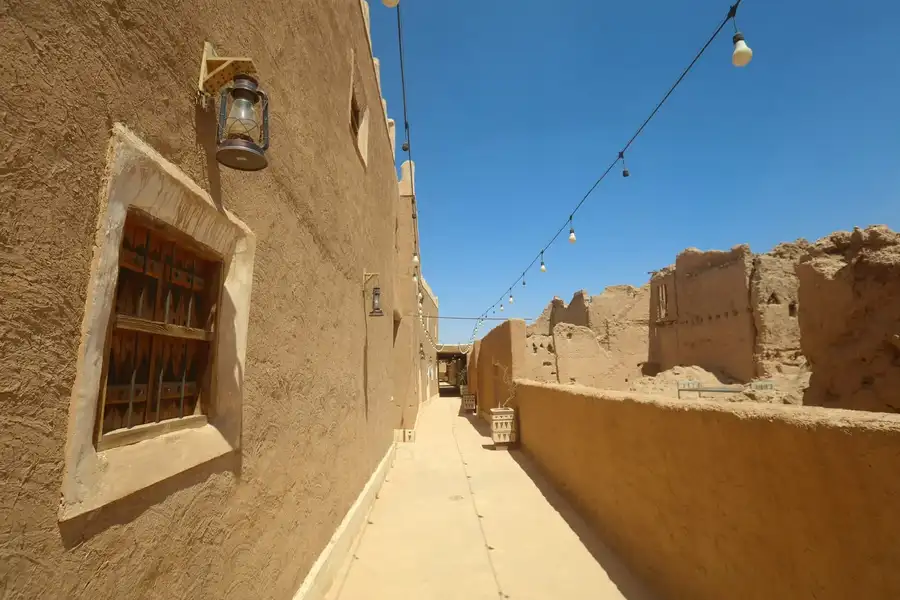
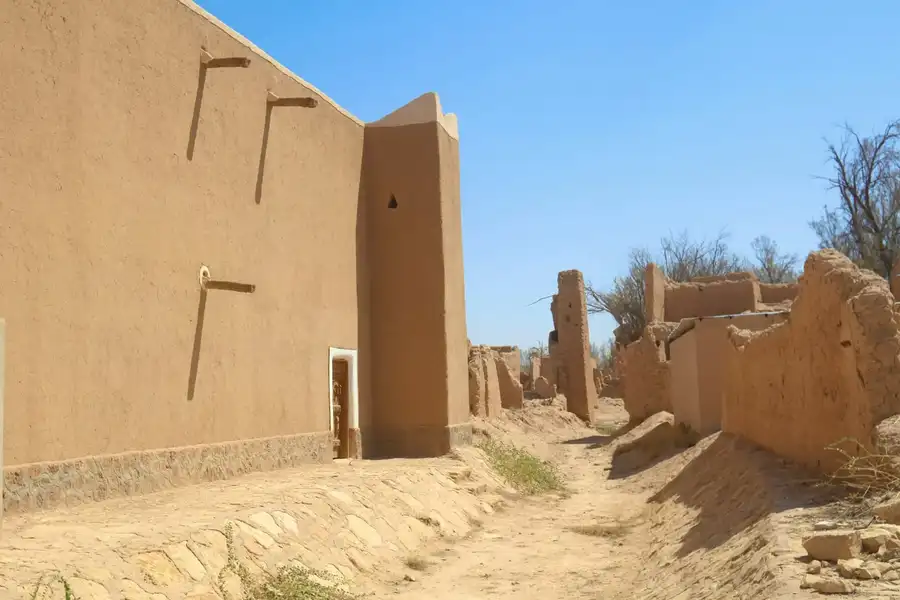
Its defences show how well its people understood fortification: in the layout of the Darwaza, in the walls, towers and wells, and in the main street with the side lanes that branch from it.
At the Darwaza
The Darwaza is the main fortified gate, set in the middle of the southern wall: the way into the walled town. Today a small sign bearing its name stands beside a restored tower and stretch of wall.
Pause there before you walk through. The thickness of the mud wall, the shadow of the tower on the ground and the narrow entrance all tell you how carefully the town once guarded its door.
Towers that taper as they rise
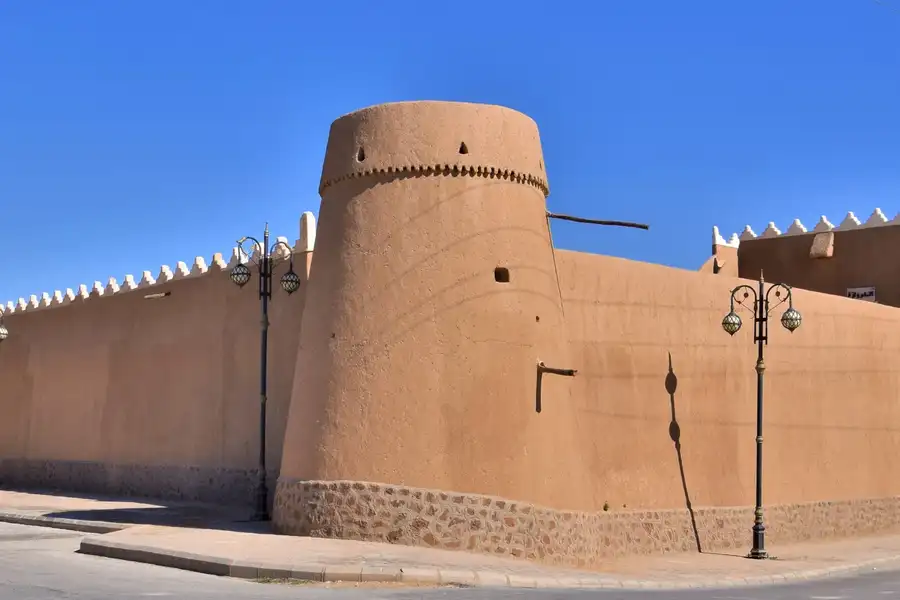
Among the towers of Sadus is the Al Muammar tower at the north-west corner, about five metres across. From it the northern wall runs 54 metres to the north-east tower. The Sultan tower and the Jumai'a tower complete the line.
The towers were built so that their diameter shrinks as they rise, a well-known Arab technique that makes a tower sturdier and removes what builders call the dead angle.
Al-Marqab, the watchtower
Some 250 metres south of the wall stands the watchtower known as Al-Marqab, once the town's eye on its southern side. In modern times the concrete-built Al-Marqab quarter grew up beside it.
The Marqab is one of the landmarks included in the third phase of the town's development project, together with the Al-Ras and Al-Manara quarters and the old palace.
Torn down, raised again
War did not spare the defences of Sadus. In 1098 AH its palace was torn down and laid waste. One of the palace's tower guards is believed to have helped the attackers inside, and that tower was later called the Khotan tower.
The walls also seem to have been broken during the campaign of Ibrahim Pasha, which destroyed fortifications across Najd. The sources show how much the townspeople cared about defending their home, and the first phase of the development project set out to rebuild and restore the village wall in full.