An oasis on the banks of Wadi Watr
Sadus grew up on the banks of upper Wadi Watr. Floods from its ravines water the farms and recharge the groundwater, and the fertile soil played a major part in the growth of the town, both as farmland and as a place to build.
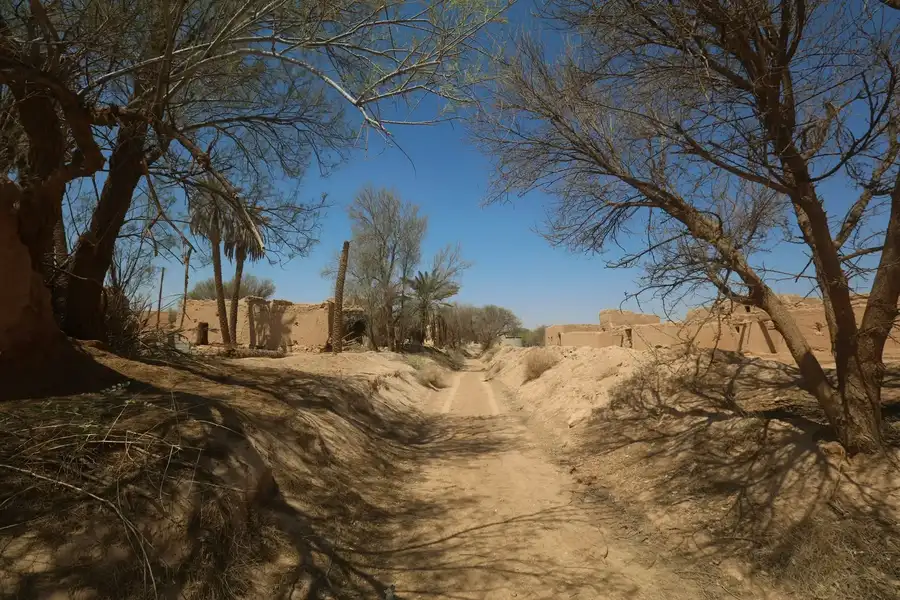
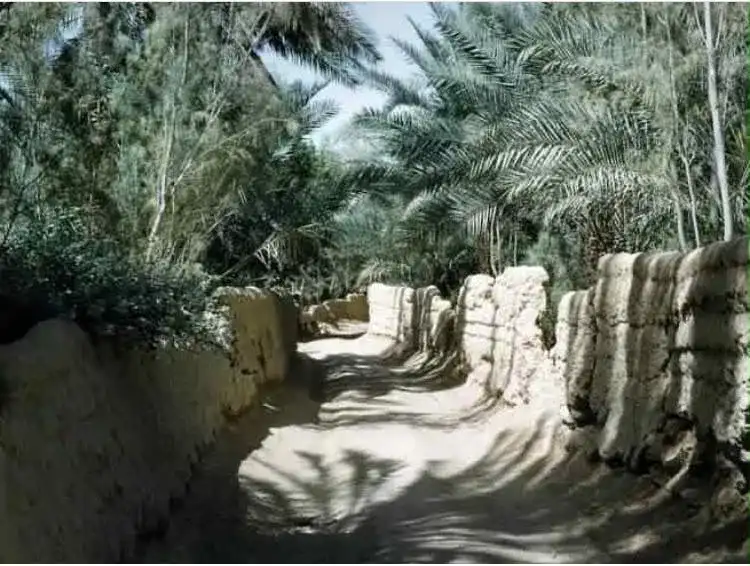
On this trail you walk in the shade of the palms, where everything begins with water.
A town of pomegranates
Sadus was one of the most fertile villages of Al-Yamamah, famous for its produce and above all its pomegranates. Geographers described its dense, productive orchards, saying that "if a thousand caravans came to it, they would make no visible dent in its harvest".
The well of Al-Fargh
Oral tradition tells that Hasan bin Tawq, forefather of the Al Muammar family, found Sadus a ruin of old buildings and disused wells. He re-dug its largest well, known as Al-Fargh, and settled people there to farm it; others soon followed. Sadus has been a farming oasis ever since.
What you see along the way
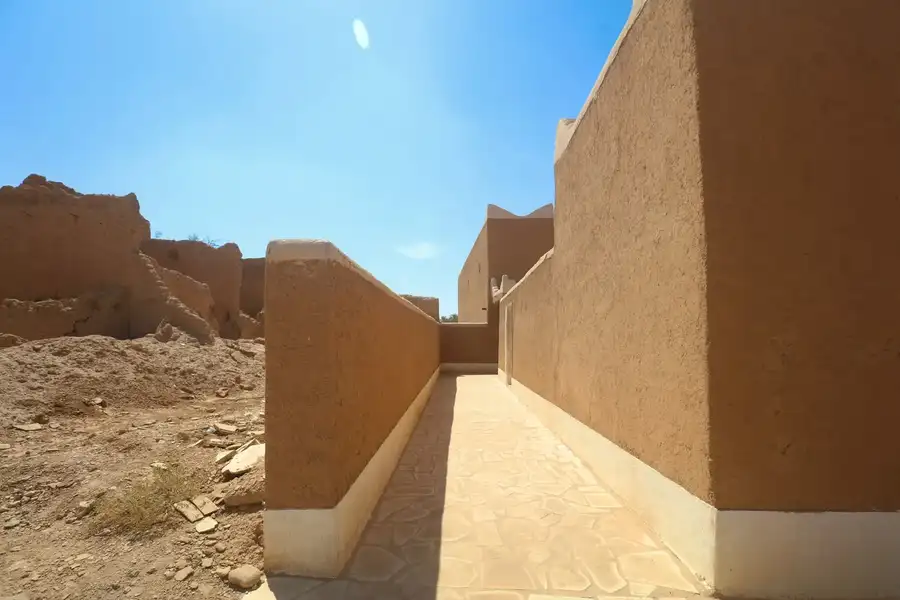
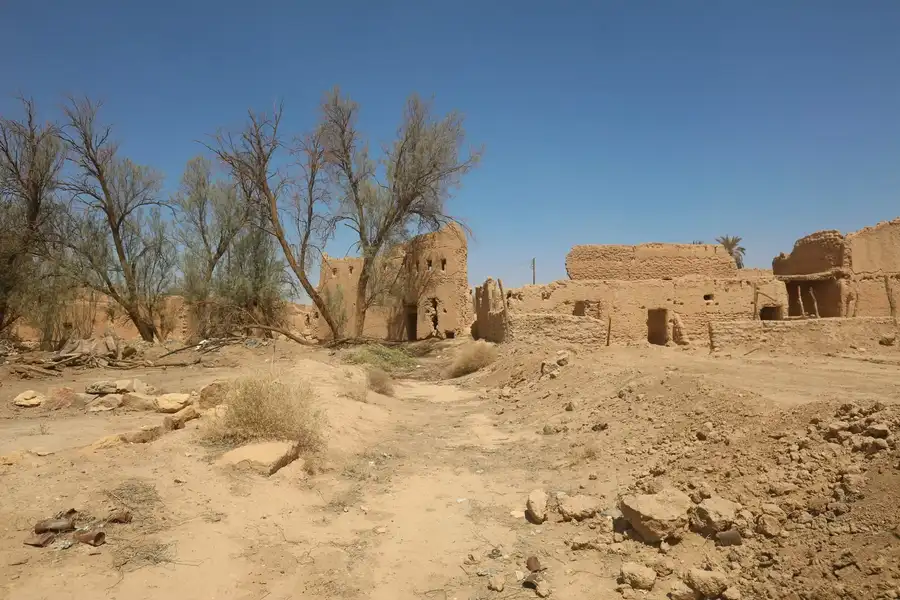
You walk among farms and palms, get to know local farming life, and see the water sources and irrigation channels that Sadus has kept along with its houses, walls and lanes. It is the picture Sadus paints of itself: farming oases, valleys and ravines around a historic village.