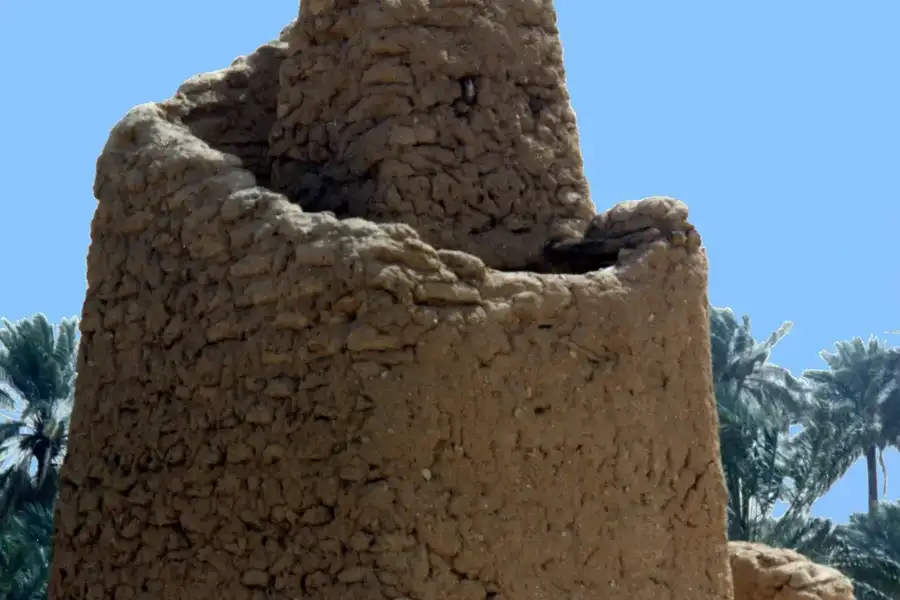
A town within its walls
Walls enclose the old town on all four sides, punctuated by defensive towers, with the fortified main gate, the Darwaza, set in the middle of the south wall. Some 250 metres south of the wall stands a watchtower known as Al-Marqab.
These defences are a fine example of how Najdi settlements were fortified in the twelfth and thirteenth centuries AH, and this is where the walk begins.
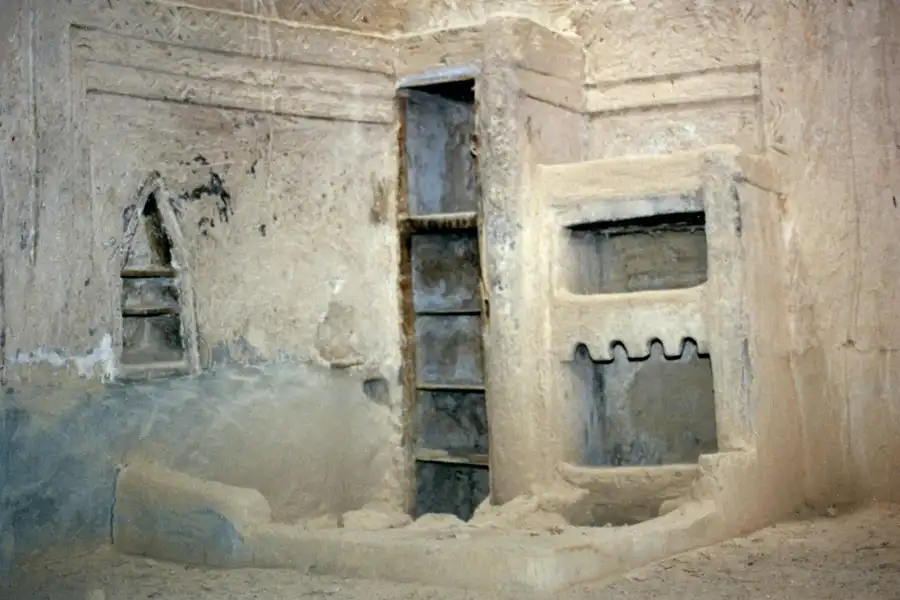
Lanes and courtyards
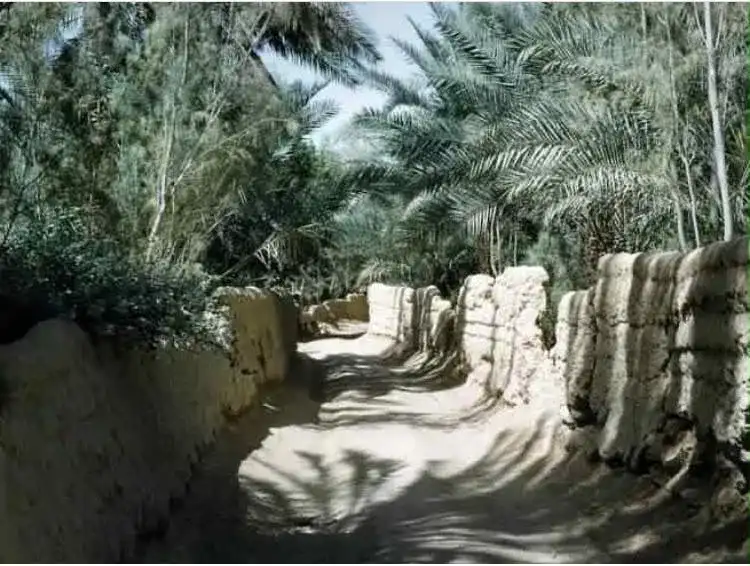
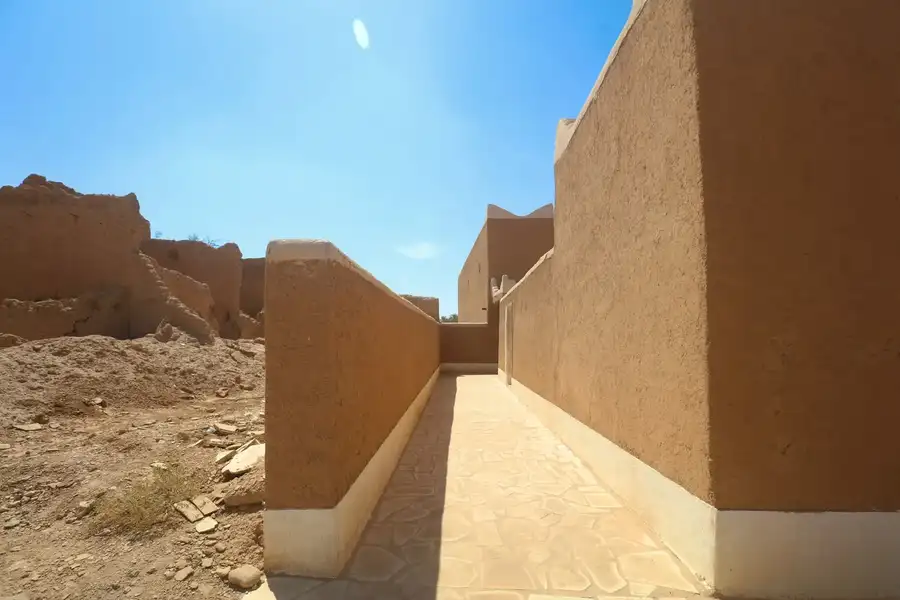
Narrow passages wind between the mud walls, houses open onto inner courtyards, and local doors and windows meet you at every turn. This is Najdi architecture adapted to its environment, a fabric that reveals the details of daily life in the village.
Inside the houses you see the craftsman's hand: plaster shelves and niches framed by carved patterns.
The old mosque
At the heart of the town stands the old mosque, a religious and social landmark in the Najdi style, bound up with the daily life of the villagers. The sources record that Sadus was one of the towns with a pulpit, meaning it had a governor and a congregational mosque.
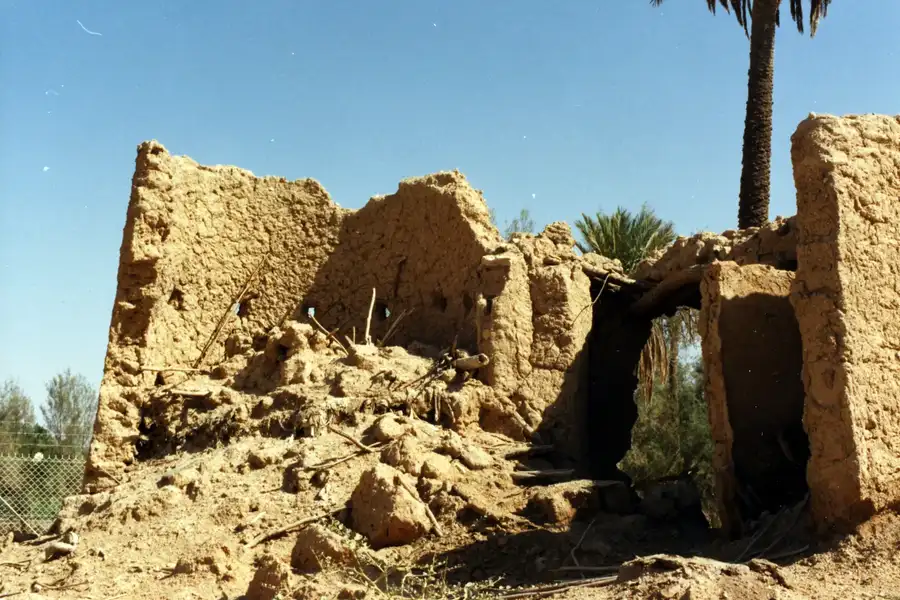
What remains, and what is gone
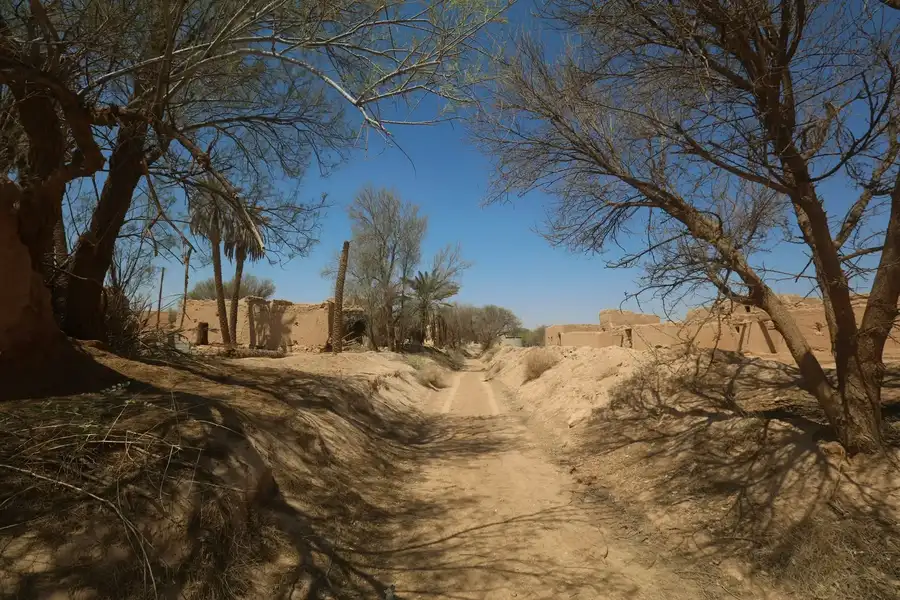
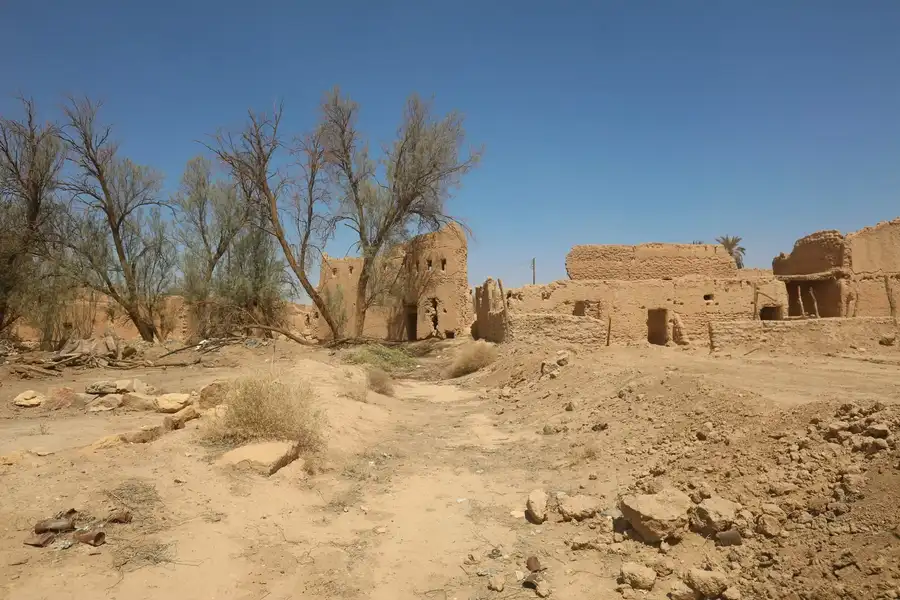
Some of the landmarks of Sadus have vanished with time; others still stand, witnesses to a deep-rooted civilisation. Between the crumbling walls and the palms you read layers of a story no book can tell.
By the end of the walk you understand why Sadus is one of the most important archaeological sites still to keep so many of its traditional buildings and features.